





















Why digitizing your book of business is the foundation for AI-powered advisor productivity, scalable growth, and smooth transitions
What Is Book of Business Digitization?
A financial advisor’s book of business is the complete record of their client relationships — names, contact information, account holdings, financial plans, communications history, compliance documentation, and every interaction that defines those relationships. For many advisors and firms, significant portions of this record still exist on paper: printed account statements, signed forms, handwritten notes, and physical files stored in cabinets or offsite facilities.
Book of business digitization is the process of converting these physical records into structured, searchable, accessible digital assets — and connecting them to the technology platforms that advisors, operations teams, and compliance professionals use every day. It is not just about scanning documents; it is about transforming inert paper records into living, actionable data.
A digitized book of business is not just easier to search — it becomes the fuel for AI systems that can surface insights, identify opportunities, and automate processes that paper records simply cannot support.
Why Digitization Is Now Urgent
Regulatory and Audit Exposure
Regulators expect firms to produce client records quickly and completely during examinations. Physical records that are difficult to locate, incomplete, or in inconsistent formats create significant regulatory risk. Digital records, maintained in a structured repository with full metadata and version history, enable firms to respond to regulatory inquiries with confidence.
Advisor Transitions and Succession Planning
When an advisor retires, moves to another firm, or transfers a practice to a successor, the quality and accessibility of client records directly determines how smoothly the transition executes and how many clients are retained. Physical books that cannot be rapidly transferred and understood by a new advisor are a significant transition risk — and a potential client retention crisis.
AI and Analytics Readiness
AI-powered advisory tools — from client insight engines to predictive analytics platforms — require structured, complete, accessible data to deliver value. Firms operating with paper-based or partially digitized records cannot access the benefits of AI-driven advisor productivity tools until their underlying data is in a usable form.
The Digitization Process: A Practical Framework
Step 1: Inventory and Classification
Before any digitization work begins, firms need a complete inventory of what records exist, where they are located, and what categories they fall into. Account opening documents, financial plans, correspondence, compliance records, and operational files each have different retention requirements and downstream uses, and the digitization strategy should reflect these differences.
Step 2: AI-Powered Document Processing
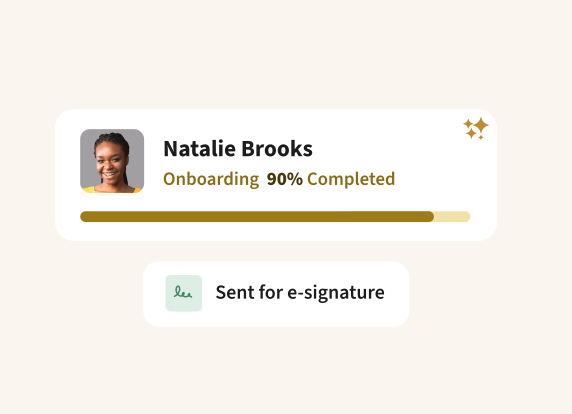
Modern digitization goes beyond scanning. AI document processing tools automatically classify document types, extract structured data from forms and statements, recognize handwritten content, and validate extracted data against known client records. This transforms scanned images into structured data assets that can be searched, queried, and integrated with operational systems.
Step 3: Data Normalization and Enrichment
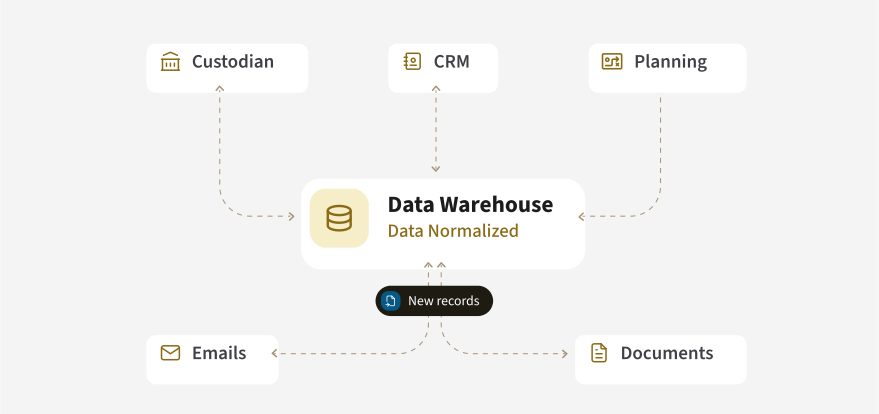
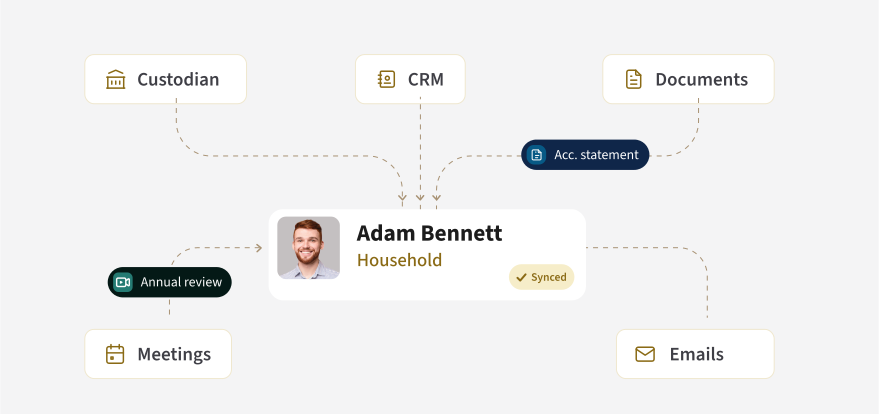
Digitized records from different time periods, different advisors, and different systems often use inconsistent data formats, naming conventions, and field structures. A data normalization layer resolves these inconsistencies, creating a unified client record that combines historical paper data with current digital information into a single, coherent view.
Step 4: Integration with Operational Systems
Digitized records only deliver full value when they are accessible within the systems advisors and operations teams actually use. Integration with the advisor desktop, CRM, portfolio management platform, and compliance system ensures that historical client data is available in context — not locked in a separate document repository that requires a separate login and manual search.
How JIFFYAI Supports Book of Business Digitization
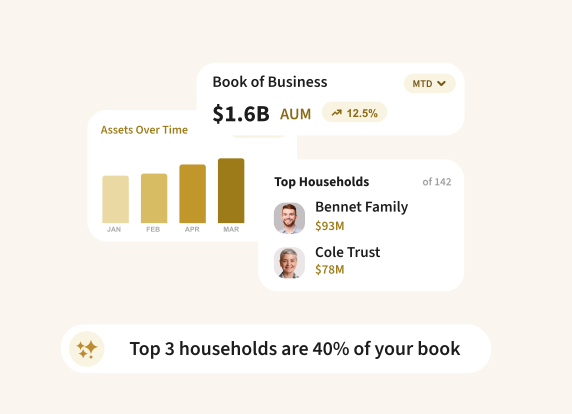
JIFFYAI’s Data Warehouse and Aggregation platform supports all data types — structured records, semi-structured forms, and unstructured documents including PDFs, emails, and voice notes — providing a unified foundation for complete book of business digitization. The Advisor Universal Desktop then surfaces this digitized data in the advisor’s daily workflow, making historical records as accessible as real-time account information.
| Data Type | JIFFYAI Capability | Advisor Benefit |
|---|---|---|
| Account opening documents | AI extraction and classification | Historical account data searchable from advisor desktop |
| Financial plans and proposals | Document processing and version management | Complete planning history accessible in client context |
| Client correspondence | Email and communication ingestion | Full interaction history without manual logging |
| Compliance records | Automated classification and retention management | Audit-ready documentation always current |
| Handwritten notes and forms | Intelligent OCR and data extraction | Legacy paper records converted to searchable data |